


Copyright © 2025 Greenster


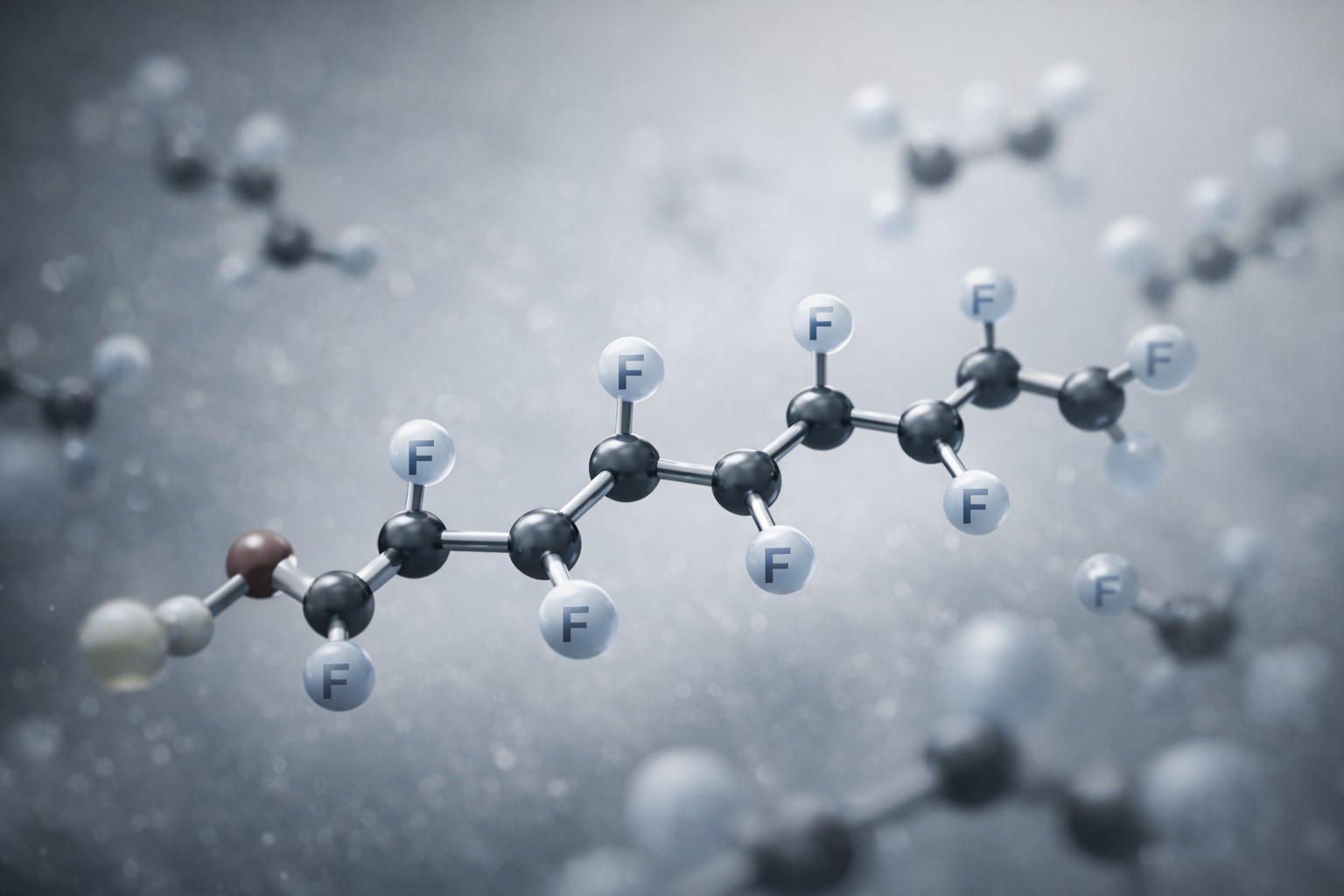

A new study published in Advanced Materials describes a filtration breakthrough that could significantly improve how PFAS - often called “forever chemicals” - are removed from water. Researchers report that a newly developed material can capture certain PFAS compounds far faster than existing filters and then help break them down safely. Because PFAS do not naturally degrade and are linked to serious health risks, including cancer and immune disorders, they have become one of the most persistent pollution challenges worldwide. The findings point to a rare combination in PFAS research: rapid removal paired with a credible path toward destruction.

PFAS are a large group of man-made chemicals that have been widely used since the mid-20th century because they repel water, grease, and heat. That durability is exactly what makes them so difficult to manage once they enter the environment. They accumulate in rivers, groundwater, and drinking water systems, and most current cleanup methods focus on trapping the chemicals rather than eliminating them. Common filters like activated carbon or ion-exchange resins can remove PFAS from water, but they work slowly and generate contaminated waste that still needs to be stored or treated.
The new approach centers on a material known as a layered double hydroxide, or LDH, made from copper and aluminum. The material carries a positive charge, which strongly attracts many PFAS molecules that carry a negative charge. This electrostatic pull allows the LDH to absorb PFAS far more quickly than traditional filtration media. In testing, long-chain PFAS were captured up to 100 times faster than with commonly used carbon filters, and in some conditions the material performed hundreds of times more efficiently. Faster capture means smaller systems, lower costs, and greater potential for real-world use.
Importantly, the material was tested in more than just clean laboratory water. It was evaluated in river water, tap water, and wastewater - environments where other contaminants often interfere with performance. Across these settings, the LDH continued to remove PFAS quickly and reliably. It also worked in both batch tests and continuous-flow systems, suggesting it could be integrated into existing water treatment infrastructure rather than requiring entirely new facilities. This “drop-in” compatibility removes one of the biggest barriers that has limited previous PFAS technologies.
Capturing PFAS is only half the challenge. Most existing systems simply move the chemicals from water into a filter, leaving behind hazardous waste. Destruction typically requires very high temperatures, which can create toxic byproducts or break PFAS into smaller, still-persistent compounds. The new process takes a different approach. Once PFAS are concentrated on the LDH material, the system uses moderate heat - around 400 to 500 degrees Celsius - to break the strong carbon-fluorine bonds that make PFAS so stable. The released fluoride binds with calcium, forming a stable compound that can be safely disposed of.
Another key advantage is reusability. After the heating step, the LDH material can be regenerated and used again. Early tests showed that it could go through at least six full cycles of capture, destruction, and reuse while maintaining high performance. This reduces waste and improves the overall sustainability of the system. Instead of producing growing volumes of contaminated filters, the process closes the loop by neutralizing PFAS and restoring the material for continued use.
Challenges remain before the technology can be widely deployed. Scaling up, meeting regulatory requirements, and proving long-term performance in complex water systems will take time. Still, the results suggest that combining fast adsorption with controlled destruction could mark an important shift in how PFAS contamination is addressed. As concerns over drinking water safety continue to grow, approaches that both remove and neutralize “forever chemicals” may play a critical role in future cleanup efforts.
Stay in the loop
Stay
0 Comments